Definitions
'Social Justice' & 'Community Cultural Development'
There have been many scholars and those who work within the social service realm that have tried to define social justice, and how it operationalizes in their work. John Rawls, an American philosopher, believed that we should judge whether something is “justice” or not by its fairness, or how well it treats those who are worst-off in a society (Rawls, 1971). His principles suggest that, “a society is just only if the worst-off in that society are better off than the worst-off would be under any alternative arrangement” (Wolff, 2008). Another definition of social justice has been brought by Sen (1999) and Nussbaum’s (2011) Capabilities Framework, which says work is socially just when the focus is on raising people to their highest potential. This work should go beyond meeting the individual’s bare minimum needs and instead, propel people to ultimate freedom to achieve success as defined by the individual.
Social
Justice
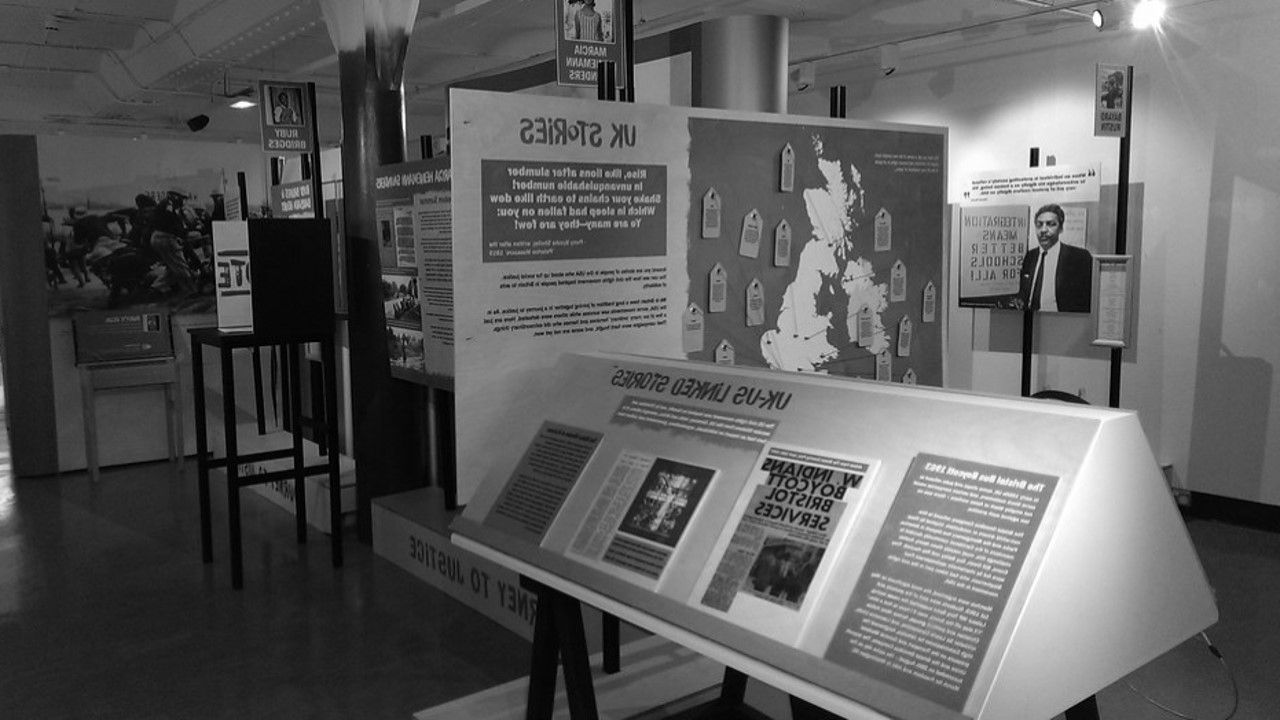
The mission of Journey to Justice is “to galvanise people to take action for social justice through learning about human rights movements and the arts”. I believe that the Capabilities Framework described above is most relevant to the work of Journey to Justice, and thus, will be the definition of social justice that will guide this research project. By teaching communities in the UK about movements toward social justice through the arts, Journey to Justice is empowering people with knowledge that allows them to reach their highest potential, so they are pushed toward achieving success both for themselves and advocating it for others through social justice work.

Photo credit: https://arlenegoldbard.com/essays/books/newcc/
Using Goldbard’s discussion in their book, New Creative Community: The Art of Cultural Development, it is clear that it can be argued that Journey to Justice’s work is an example of community cultural development. First, Goldbard (2006) defines community cultural development as culture being the connector between the community and its development, using the term “culture” instead of “art” due to its range of values, attitudes, beliefs, orientations, and assumptions rather than the often narrow views and understanding one has of the term “art”. This point is the reasoning why the term “community cultural development” is utilized for this research project.
Community
Cultural
Development

Second, community cultural development work is “predicated on the understanding that expression, mastery, and community through the arts powerfully encode cultural values, bringing deeper meanings of experience to the surface so they can be explored and acted upon” (Goldbard, 2006). Reflecting back on Journey to Justice’s mission above, their commitment to teaching communities in the UK about the human rights movement through the arts can directly lead to these individuals and communities investigating the deeper meanings of these experiences, encouraging them to act upon issues of human rights in the future.
Photo credit: http://www.youthcoalition.org/